A new protected area in the Lake Memphremagog watershed
Magog, May 26, 2026 – The Memphrémagog Nature Foundation (FNM) and Memphrémagog Conservation (MCI) are proud to announce the conservation of 38.97 hectares (96.3 acres) within the city of Magog.
Several years ago, the Goodwin family approached the MCI with the aim of taking steps to realize their dream of preserving their family treasure in perpetuity. Since 2025, that dream has become a reality. The Memphrémagog Nature Foundation and the MCI are deeply grateful to the Goodwin family.
This project was made possible thanks to the exceptional partnership between the FNM and the MCI, who are working together to conserve the Lake Memphremagog watershed. Appalachian Corridor and many other partners also played an important role in this initiative.
This new protected area adds to the land already protected by the FNM, bringing the total to 168 hectares.
Biodiversity Conservation and the Fight Against Climate Change
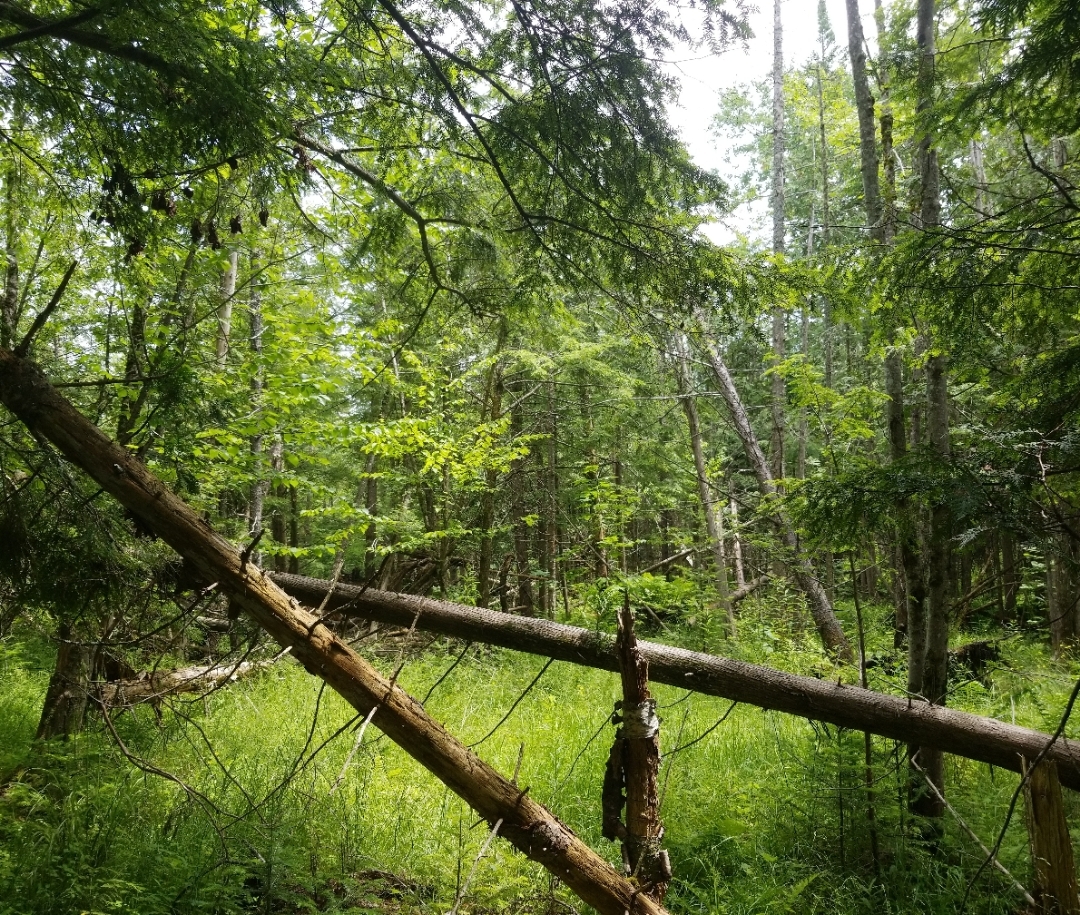
The creation of this new protected area on private land will permanently protect natural habitats of interest, including forests, wetlands, waterways, and a prairie. The diversity of these habitats supports a variety of wildlife species, some of which are considered threatened or vulnerable. This includes several forest and meadow birds, such as the bobolink, as well as the northern dark salamander.
These now-protected natural habitats contribute to the fight against climate change by promoting carbon absorption and storage and by mitigating certain impacts linked to the increasing frequency of extreme weather events, such as heat waves, droughts, and floods. Thus, each protected area in the Lake Memphremagog watershed contributes, at the local level, to addressing the two major global environmental crises: biodiversity loss and climate change.
This project was funded by Environment and Climate Change Canada through the Canada Nature Fund’s Community-Designated Priority Sites for Species at Risk program and the Natural Heritage Conservation Program – Conservation Organizations Fund. It was also supported by the Accelerating Conservation in Southern Quebec project, a project co-funded by the Government of Quebec and Nature Conservancy of Canada. The Quebec Wildlife Foundation, Wildlife Habitat Canada, and the City of Magog also contributed to the project’s implementation.
QUOTES
“Conserving natural spaces in Magog, Quebec, helps protect the habitat of species at risk and improve the health of our ecosystems. This project reflects the work being done across Canada to protect biodiversity and ensure that communities can continue to enjoy resilient and interconnected natural landscapes.”
– The Honourable Julie Dabrusin, Minister of the Environment, Climate Change and Nature
“This new protected area, located in a ‘white zone,’ has made it possible to protect land that is now set aside from residential development in an area where there are very few protected spaces. We would like to highlight the collaboration of the many partners who supported the project—a collaboration that is essential if we are to maintain a healthy environment for future generations,” said Judy Hopps, president of the FNM.
“The conservation of the Goodwin property is of particular importance in the Lake Memphremagog watershed. Indeed, it embodies the very essence of voluntary conservation thanks to landowners like the Goodwin family, who are deeply attached to nature and their family heritage. By protecting their property, they are bequeathing a precious asset to future generations,” emphasizes Johanne Lavoie, president of the MCI.
“For nearly 90 years, five generations of the Goodwin family have lived along Chemin des Pères, working on the farms, hunting in the woods, exploring the fields, and swimming in Lake Memphremagog. The summers we’ve spent together over the decades have laid the foundation for the many families descended from the original Goodwins who settled here. The lands surrounding our beloved lake are precious and a true privilege. Recognizing the importance of this watershed, our family has decided to ensure that our small piece of land remains in its natural state. To that end, we have donated 39 hectares of beautiful fields and forests along Chemin des Pères to the FNM. This reflects our gratitude for all these decades of wonderful memories spent on this land, as well as our respect for this rural heritage that is so dear to us. We encourage other landowners to consider making a similar decision,” emphasizes Liz Goodwin and family.
“The protection of these natural habitats complements those that are part of the large, increasingly rare forests in our region, which are interconnected by an ecological corridor of great importance in the Green Mountains. “Appalachian Corridor is pleased to be collaborating with the Memphremagog Nature Foundation (FNM) and Memphremagog Conservation (MCI) on this important conservation project,” said Caroline Bisson, Co-Executive Director of Appalachian Corridor.
The City of Magog is particularly proud of the creation of this new protected area, which is part of its strategy to preserve natural habitats. These efforts aim to increase tree cover and improve the protection of water, shorelines, and sensitive habitats. “Preserving natural environments helps build communities resilient to climate change, and that is one of the reasons why we must strike a balance between developing our region and conserving natural environments,” said Nathalie Pelletier, mayor of the City of Magog.
ABOUT
Appalachian Corridor is a nonprofit conservation organization that has been working since 2002 in the Northern Green Mountains, a section of the Appalachian Mountains in southern Quebec. Its mission is to consolidate and leave as a legacy a vast corridor of permanently protected natural areas. In response to the dual crisis of climate change and biodiversity loss, Appalachian Corridor, supported by its conservation partners, is implementing a conservation strategy that has protected more than 20,000 hectares of high ecological value to date. corridorappalachien.ca
The Accelerating Conservation in Southern Quebec (ACSQ) project is a co-funding agreement established between the Government of Quebec and Nature Conservancy of Canada (NCC) that benefits conservation organizations in Quebec. It aims to protect and conserve natural habitats of ecological interest, notably through the acquisition of private lands for protected and conserved areas and the establishment of ecological corridors. The ACSQ will promote the development and sound management of the network of protected areas on private lands, as well as public access to nature. The funds invested in the ACSQ by the Government of Quebec over five years must be matched by CNC and its partners with other funds not provided by the Government of Quebec.
The Government of Canada’s Natural Heritage Conservation Program (NHCP) is a unique partnership that supports the creation and recognition of protected and conservation areas through the acquisition of private lands and private land interests or rights. To date, the Government of Canada has invested more than $500 million in the Program, supplemented by over $1 billion in contributions raised by the Nature Conservancy of Canada, Unlimited Ducks Canada, and the country’s land trust community, which has helped protect and conserve nearly 840,000 hectares of ecologically sensitive land.
The Government of Canada’s “Priority Areas for Species at Risk” initiative focuses conservation efforts on areas characterized by high biodiversity and a high concentration of species at risk. Created under the Canada Nature Fund and expanded through the “Strengthening Our Natural Heritage” initiative, this program supports collaborative, landscape-scale projects that simultaneously address the needs of multiple species and ecosystems. To date, “Priority Areas” have advanced more than 165 projects benefiting over 300 species at risk across nearly 30 million hectares, thereby helping to improve conservation outcomes and strengthen healthy, resilient ecosystems.
The Nature Fund of Canada supports the protection of Canada’s biodiversity through the creation of protected areas and conservation, as well as through initiatives that contribute to the recovery of species at risk. The Fund is open to non-profit and Indigenous organizations, provinces, territories, and other stakeholders. Learn more: Canada Nature Fund – Canada.ca
The mission of the Quebec Wildlife Foundation is to promote the conservation and enhancement of wildlife and its habitats. Thanks to contributions from more than one million hunters, anglers, and trappers in Quebec, thousands of donors, and numerous private companies, the Foundation has supported more than 2,000 organizations across Quebec since 1987, creating a true wildlife movement. fondationdelafaune.qc.ca