Highway 10: A Better Framework for Protecting and Restoring Ecological Corridors
Knowlton, Lac-Brome, September 8, 2026 – Appalachian Corridor is continuing its efforts to improve ecological connectivity in the Northern Green Mountains with the update of its Highway 10 Ecological Connectivity Plan. The new version provides a better framework for protecting and restoring ecological connectivity between the ecological corridors on both sides of this major roadway infrastructure.
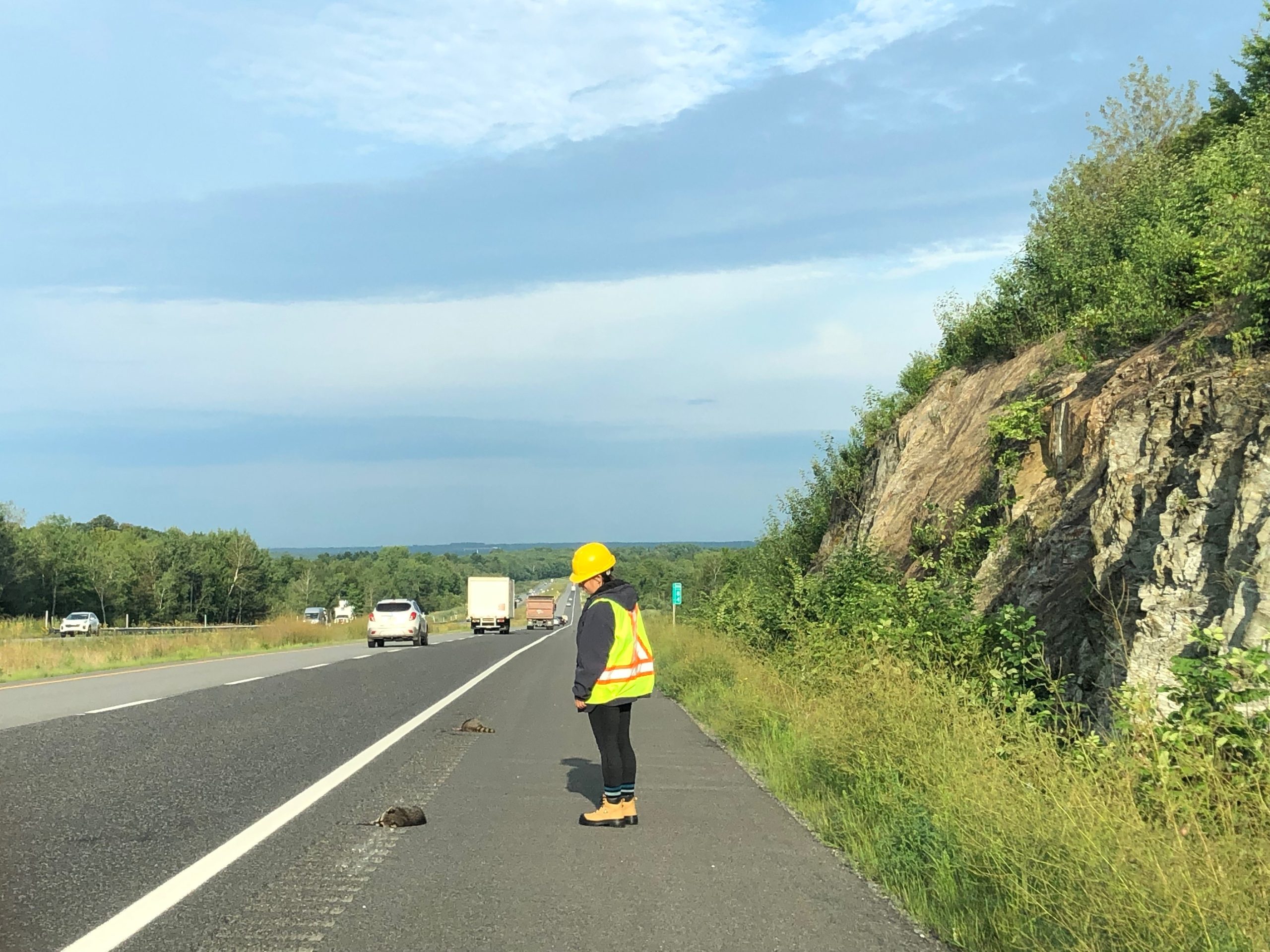
For several years now, Appalachian Corridor has worked with a number of partners to reduce the impacts of habitat fragmentation caused by Highway 10. Like many large transport infrastructures, the highway is a major barrier to wildlife movement, restricting the circulation of species and increasing the risk of collisions with motor vehicles.
Results already seen in the field
Wildlife crossings have proven effective around the world and the culvert fitted with a wildlife shelf at exit 115 of Highway 10 has shown its effectiveness at reconnecting natural environments and strengthening biodiversity.
Originally published in 2022, the Highway 10 Ecological Connectivity Plan is the result of several years of research and collaboration with many partners and municipalities. It recommends concrete measures to promote the safe movement of animals, notably by installing wildlife crossings and optimizing existing infrastructure.
In Eastman, the Ministère des Transports et de la Mobilité durable (MTMD) will soon be carrying out a major project to replace eight culverts with two new bridges over the Missisquoi Nord River. In addition to improving the infrastructure’s ability to withstand the effects of climate change, the project will provide more space for the movement of small, medium and large animals.
Restoration and conservation for greater impact
The updated Plan continues to recommend setting up new wildlife crossings, but has added an important component: restoring and conserving the natural areas around the crossings. Appalachian Corridor’s initial plan only recommended the crossings, namely one or two bigger crossings for large animals, seven crossings for medium and smaller animals and the enhancement of existing structures (culverts, water corridors).
The new chapters of the Plan present a conservation plan to strengthen the protection of the natural areas in the ecological corridors on both sides of the highway, and to see to their ecological restoration. It indicates the sectors to focus on and the concrete actions to take to improve the connectivity of the territory and facilitate wildlife movement.
To encourage the Plan’s adoption, Appalachian Corridor held a consultation workshop in July that brought together several partners from the territory. Municipalities, RCMs, conservation organizations, affiliate members and representatives of the agricultural community were invited to share their knowledge and express their concerns. These discussions enriched the assessments, aided in clarifying certain recommendations and helped rally the region around ecological connectivity. Today, following the Rendez-vous des Montagnes Vertes organized by Appalachian Corridor, the territory’s municipalities are coming together to continue taking coordinated action to connect the landscapes and territories and to implement the Plan. In addition, April Martinig of Université de Sherbrooke and her NORTH (Network for Observation and Research in Terrestrial Habitats) lab are currently developing two research projects on wildlife movement in the Green Mountains that will confirm whether the modified structures are effective and whether other measures could complement them.
A commitment to the future
Thanks to these new strategic directions, Appalachian Corridor hopes to better protect and restore the ecological network of the Green Mountains to benefit biodiversity and local communities.
It is calling on the community to take part in this collective effort through the launch of a brand-new fundraising campaign, entitled Give for greater ecological connectivity!
ABOUT
Founded in 2002, Appalachian Corridor is a non-profit conservation organization dedicated to protecting the Northern Green Mountains in southern Quebec, a subrange of the Appalachian Mountains. Its mission is to create and connect a vast network of protected natural areas, ensuring the long-term conservation of ecologically significant ecosystems. Working closely with conservation partners, private landowners, municipalities and local communities, it advances strategic conservation solutions to address the twin crises of climate change and biodiversity loss. To date, these efforts have resulted in the permanent protection of more than 20,000 hectares of ecologically valuable land. For more information, visit appalachiancorridor.ca.
Founded in 2022 by François Roberge, the Roses of Hope Foundation has donated more than $5.1 million to various causes. The Foundation’s mission is to provide financial aid to organizations that improve community well-being and protect the environment. It has notably contributed to funding the fight against breast cancer and care for women affected by this disease. In 2025, the Be Your Own Breast Friend campaign raised $510,000 for the cause. In keeping with its commitment to contributing to nature conservation, the Roses of Hope Foundation donated $2 million to non-profit organizations working to protect the environment in 2024 and 2025, promising to do the same in 2026.
The Ministère des Affaires municipales et de l’Habitation (MAMH) financially supports the updating of the Highway 10 Ecological Connectivity Plan, under the regional priorities sub-component of the regional reach component of the Fonds régions et ruralité (regions and rural areas fund).